

The CS2 Skin Economy in 2026: Where the Market Stands
JULY 24, 2026
#marketanalysis#guide 6 min read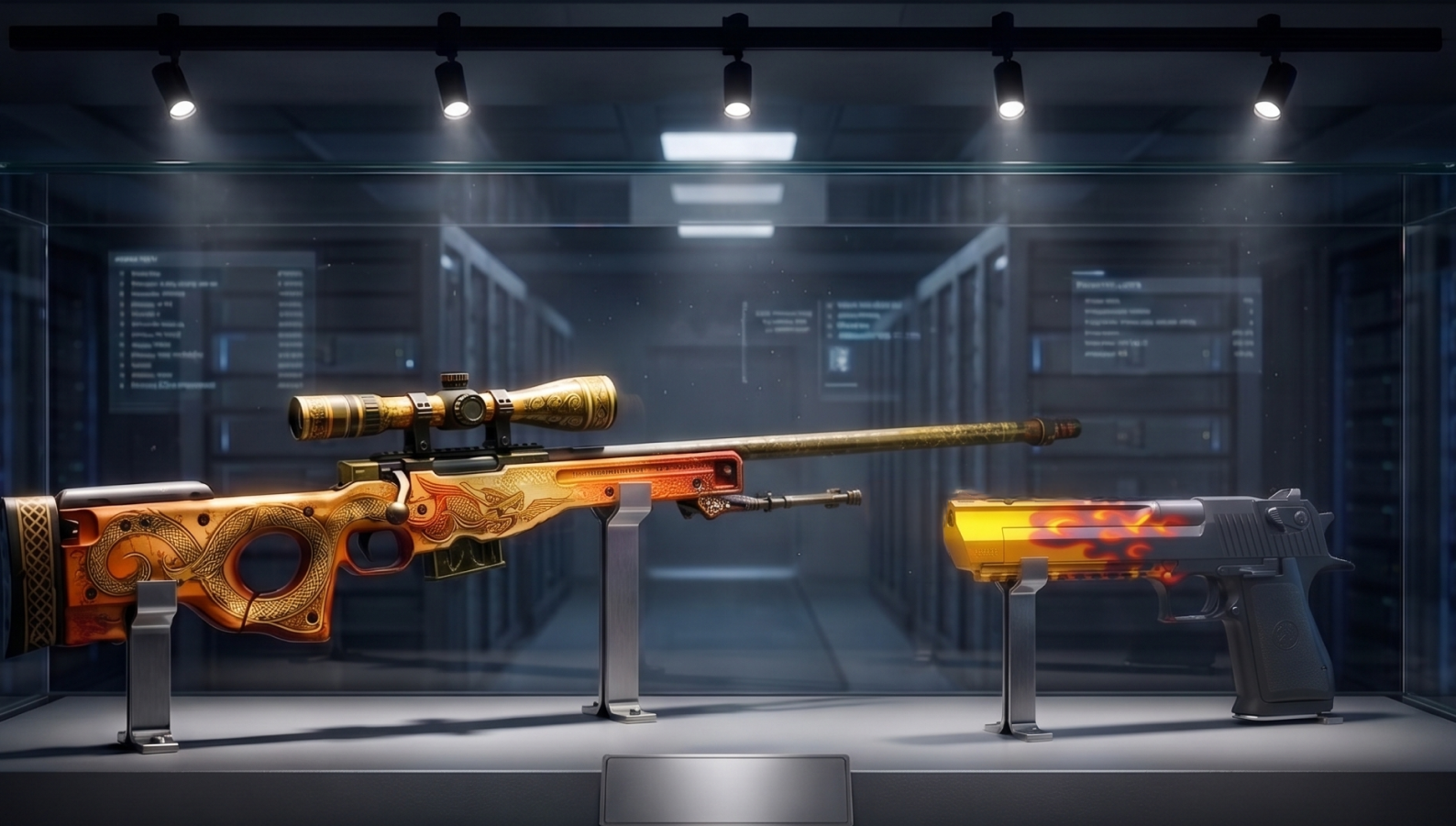

The CS2 skin economy in 2026 has been volatile rather than steadily recovering from the October 2025 trade-up crash. Market capitalization sits at roughly $6.9 billion as of mid-2026 according to third-party market trackers, though estimates vary significantly by source, some report figures as low as $3-4 billion depending on methodology. Daily trading holds steady outside tournament windows, knives and gloves still concentrate the bulk of market value, and IEM Cologne 2026 has just driven a fresh wave of demand for stickers and souvenir items tied to Falcons, NiKo, m0NESY, and karrigan.
Market Cap and the State of the CS2 Skin Economy
Late 2025 was rough. A trade-up contract update let players convert five Covert-grade skins into a knife or a pair of gloves, and the market reacted fast. Prices on premium knives and gloves dropped hard within 48 hours, and the shock rippled across the rest of the economy as traders reassessed what scarcity actually meant anymore.
Recovery since then has not been a straight line. Market capitalization rebounded from the crash low to roughly $5.5 billion within about a month, and as of mid-2026 sits around $6.9 billion according to third-party market trackers, though estimates vary considerably, some independent analyses report figures as low as $3-4 billion depending on which marketplaces and item categories are counted. Daily transaction volume has held firm even as the headline number moves, and buyer re-entry at lower price points has created a visible floor under standard knives and gloves. The CS2 economy has weathered supply shocks before, from the CS:GO transition to periodic Valve interventions, and 2026 looks like another chapter of that same volatility rather than a clean recovery story.
For anyone tracking cs2 skins prices day to day, the pattern through the spring was consolidation ahead of the Cologne window, and that tournament has now delivered the demand spike it usually does.
What Actually Moves CS2 Skin Prices
Two mechanics explain most of the movement in this market, and neither gets discussed as often as it should.
Float Value and Pattern
Float value is a number between 0.00 and 1.00 that determines how worn a skin looks, ranging from Factory New (0.00 to 0.07) to Battle-Scarred (0.45 to 1.00). A lower float means a cleaner finish, and on high-value skins the gap between a 0.01 float and a 0.06 float can run into hundreds of dollars. Pattern index matters just as much for certain finishes. Case Hardened Blue Gems and rare Fade percentages trade at a steep premium over standard rolls of the same skin, because the pattern itself is the collectible, not just the weapon.
The Trade-Up Contract System
The trade-up contract system is a mechanic that lets players combine ten items of a given rarity tier for one item of the next tier up. Before October 2025, it excluded gold-tier items entirely, which is exactly why knives and gloves held their scarcity for years. Recognizing which cases are approaching their inflection point, and which trade-ups offer the best expected return, has become one of the core skills for anyone managing a long-term skin portfolio.
Where the Value Concentrates: Knives, Gloves, and Rare Patterns
The CS2 economy spans thousands of unique skins across every weapon, wear condition, and rarity tier, and most trade under $100. Value concentrates hard at the top instead. Knives, gloves, rare pattern rifles, and souvenir Dragon Lores account for a disproportionate share of total market value despite being a tiny fraction of total items.
The knife market remains the most consistently active premium segment. Butterfly and Karambit knives move almost instantly, driven by demand and recognizable animations, while niche blade types require more patience and a sharper read on float and pattern tiers. These are not just cosmetic upgrades anymore. A growing segment of the community treats blue gem karambits, high-float StatTrak pieces, and historically significant legacy skins as digital collectibles with real long-term value.
Rifles and the Everyday Trading Volume
Rifle skins sit at the center of everyday trading. AK-47, M4A1-S, and AWP skins generate the highest daily volume, simply because every player who touches the game needs a loadout. Popular finishes on those weapons have established floor prices that hold relatively firm, even through broader market swings.
Weapon cases that no longer drop after matches serve as the market's investment backbone. As containers get opened over time, supply of the skins inside shrinks, and prices on older, out-of-rotation pieces tend to appreciate slowly and steadily. The cs2 trade up calculator has become a standard tool for anyone managing a serious inventory, since it lets traders model expected outcomes before committing real skins to a contract.
Comparing Prices Across Marketplaces
Steam Community Market isn't the only place to buy or sell, and for serious traders, it's rarely the best one. Third-party platforms have become the default destination for anyone who wants better pricing transparency and faster withdrawal options.
Platform | Fee structure | Best for |
15% transaction fee | Zero setup, casual one-off sales | |
Lower seller fees, float/pattern-focused | Hunting specific floats and rare patterns | |
Competitive fees, fast payouts | Balanced pricing and withdrawal speed |
The gap in retained value between a well-timed third-party sale and a Steam Market listing can be significant on higher-value items, which is exactly why comparing cs2 skins prices across platforms before you commit is worth the extra two minutes. That comparison is what a tool like Skinscanner is built to do in real time, rather than checking each site by hand.
IEM Cologne 2026 and the Trading Calendar
IEM Cologne 2026 was one of the highest-activity windows on the trading calendar this year, and it delivered exactly that. Sticker demand spiked around the event as souvenir packages entered drop pools and player loadout skins attracted fresh attention, and the narrative around which teams performed well fed directly into which items traders wanted to hold. With Falcons, NiKo, m0NESY, and karrigan taking the title, sticker and souvenir activity tied to that result showed a clear jump over the surrounding weeks, echoing the pattern seen around previous Majors.
For anyone trading seriously, Cologne isn't a passive spectator event. It's one of the most information-rich stretches of the year, and the traders who do best through it are the ones checking real-time prices across multiple marketplaces rather than relying on a single listing.
Ready to Trade Smarter in the CS2 Skin Economy?
Before you buy or sell, compare live CS2 skin prices across every major marketplace on Skinscanner and see exactly where the best deal is sitting right now.
Want more ways to build your inventory? Join the Skinscanner Discord and start earning SSG Points through daily tasks and weekly tournaments, redeemable for skins straight from the community database.