

AK-47 Case Hardened Blue Gem: Origin of a CS2 Economy
SEPTEMBER 25, 2026
#guide 6 min read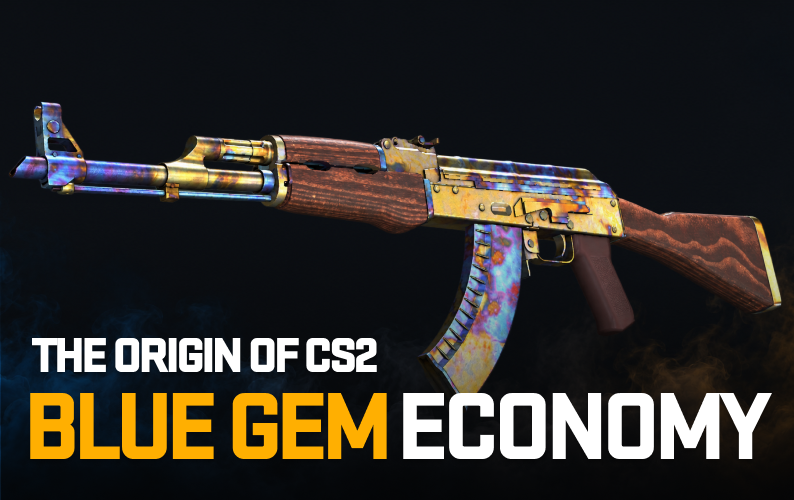

Matthew Merkel — Skinscanner's In House Trader
CS:GO Weapon Case (also known as “Weapon Case 1”) released in August 2013, and was Counter-Strike's first cosmetic case and the origin of the AK-47 | Case Hardened, including its famous pattern #661 "Scar" Blue Gem. Fixed supply, trade-up scarcity, and lasting demand explain why a decade-old case still commands a premium today.
The Counter Strike economy has come a long way from its humble beginnings. From a market cap in the billions of US dollars to entire corners of the internet being dedicated to the consumption, investing, and speculation of Counter Strike items, it is evident there is lightning in a bottle in the Counter Strike economy. While some may say the best years are behind us, it is never too late to become more informed and make better and safer decisions regarding this novel market. To understand the market today we must understand the market of yesterday and be familiar with the basics. The purpose of this blog is to help newcomers understand broad concepts of the Counter Strike market by picking apart its inaugural case: Weapon Case 1.
The Birth of CS:GO Cosmetics
The aptly-named Weapon Case 1 was the first cosmetic weapon case added to Counter Strike all the way back in August of 2013. Prior to this, Counter Strike was in the infancy stages of Global Offensive and had a very small playerbase compared to today's staggering numbers. The developers of Counter Strike at Valve had playtested the idea of in-game cosmetic items in their previous title, Team Fortress 2, to great success. Thankfully for Valve and those who enjoy the game today, the addition of cosmetics to Counter Strike proved to be an ingenious implementation with nuanced promise for the future of the game. To maintain brevity, we will be discussing the aspect of Weapon Case 1 that helped propel Counter Strike's economy in a billion-dollar market.
The Foundation of Rarity and Demand
As with every weapon case released thereafter, Weapon Case 1 was made up of varying weapon skins of differing qualities divided based upon rarity. This created a supply-and-demand dynamic that exists today with lower-rarity skins being worth less than their rarer counterparts. Additionally, this case exhibits two other constants that provide depth to cosmetics: Wear rating and Patterns. Wear rating is a random value between 0 and 1 that is attached to every cosmetic and determines the amount of visual wear to the skin. Likewise, Pattern IDs are attached to every skin and are between 1 and 1,000. While pattern IDs are not important for items whose cosmetic skins are fixed, pattern IDs are crucial for patterned-based skins, which can look entirely different depending on their ID. The early development team for Counter Strike knew how these factors could impact players' interest, as Weapon Case 1 contains one of the most prolific skins in all of Counter Strike. A skin that exhibits and emboldens the economical constants of Counter Strike: the AK-47 | Case Hardened.
The Blue Gem Phenomenon
Many new players may wonder why the price of Weapon Case has climbed to such high numbers in recent years. The main reason is due to people attempting to unbox or craft the AK's coveted "Blue Gem" patterns. These patterns are a select few out of the possible thousand pattern IDs which contain a significant amount of brilliant blue on an otherwise golden skin. The single best pattern out of the thousand is pattern #661, which has been dubbed the "scar" pattern due to the small scar of gold on the brilliant blue section of the AK. Counter Strike has a free market that allows players to set prices and demand for what they deem desirable, and the community has decided on this skin and more specifically this pattern. A StatTrak Factory New pattern #661 reportedly sold for around $1,000,000, believed to be the most expensive CS2 skin sale on record, underscoring just how far the market will pay for the single best expression of this pattern.
Why the Case is So Expensive
"So the skin is cool and rare, but why is the case so expensive?" you may be wondering. Not only does the Weapon Case 1 contain the AK-47 | Case Hardened, but it also contains the lower-tier skins necessary to trade-up to the Case Hardened. Trade-up contracts allow for players to expend 10 lower-tier rarity items in order to create 1 higher-tier item. With the Weapon Case 1 having been in the rare drop pool for more than a decade, the amount of trade-up material that exists is microscopic compared to earlier days. This results in fewer skins from the collection that are in circulation, i.e. usable for the creation of Case Hardeneds. The number of these lower-tier trade-up inputs is ever-decreasing as the case's price becomes unobtainable to the average person to unbox.
The Power of Legacy and Demand
The overarching reason for this case's long-term success is demand. The legacy of the AK-47 | Case Hardened has been cemented and there will most likely always be demand for it. This demand causes more people to open Weapon Case 1 or use its common skins to attempt to trade-up to Case Hardeneds. All of these conditions cause the supply of Weapon Case 1 and its contents to decrease. There are many rare and discontinued items from this era of Counter Strike that have been left behind, victims of a lack of demand or a shift in community interest rather than genuine scarcity. Rarity alone doesn't guarantee lasting value, without sustained demand behind it, even a genuinely uncommon item can sit at a stagnant price for years.
Conclusion
The AK-47 | Case Hardened is a cornerstone of the Counter Strike economy and is the epitome of many of the constants attributed to successful and sought after cosmetic items. Likewise, Weapon Case 1 acts as the key to the Case Hardened's kingdom. As the years continue to pass and Counter Strike continues to grow, more and more keys are destroyed in an effort to obtain the crown jewel of Counter Strike. With all the speculation, misinterpretation, and confusion that is present surrounding Counter Strike and its well of financial opportunity, looking back to the fundamentals that built a billion-dollar dynasty can aid in making judgement calls. Weapon Case 1 and the well-established concepts it exhibits can act as a guide for anyone confused about why and where demand is distributed across cosmetic items in the Counter Strike economy.
Ready to Track Down Your Own Blue Gem?
Before you buy or open a case, compare live CS2 skin prices across every major marketplace on Skinscanner and see exactly where an AK-47 | Case Hardened is listed cheapest right now.
Want more ways to build toward a piece like this? Join the Skinscanner Discord and start earning SSG Points through daily tasks and weekly tournaments, redeemable for skins straight from the community database.